
Green Fingers
A Verdant Heart
Classical Roots is a free weekly newsletter. If you want to support the cause, the best way you can help us is to spread the word.
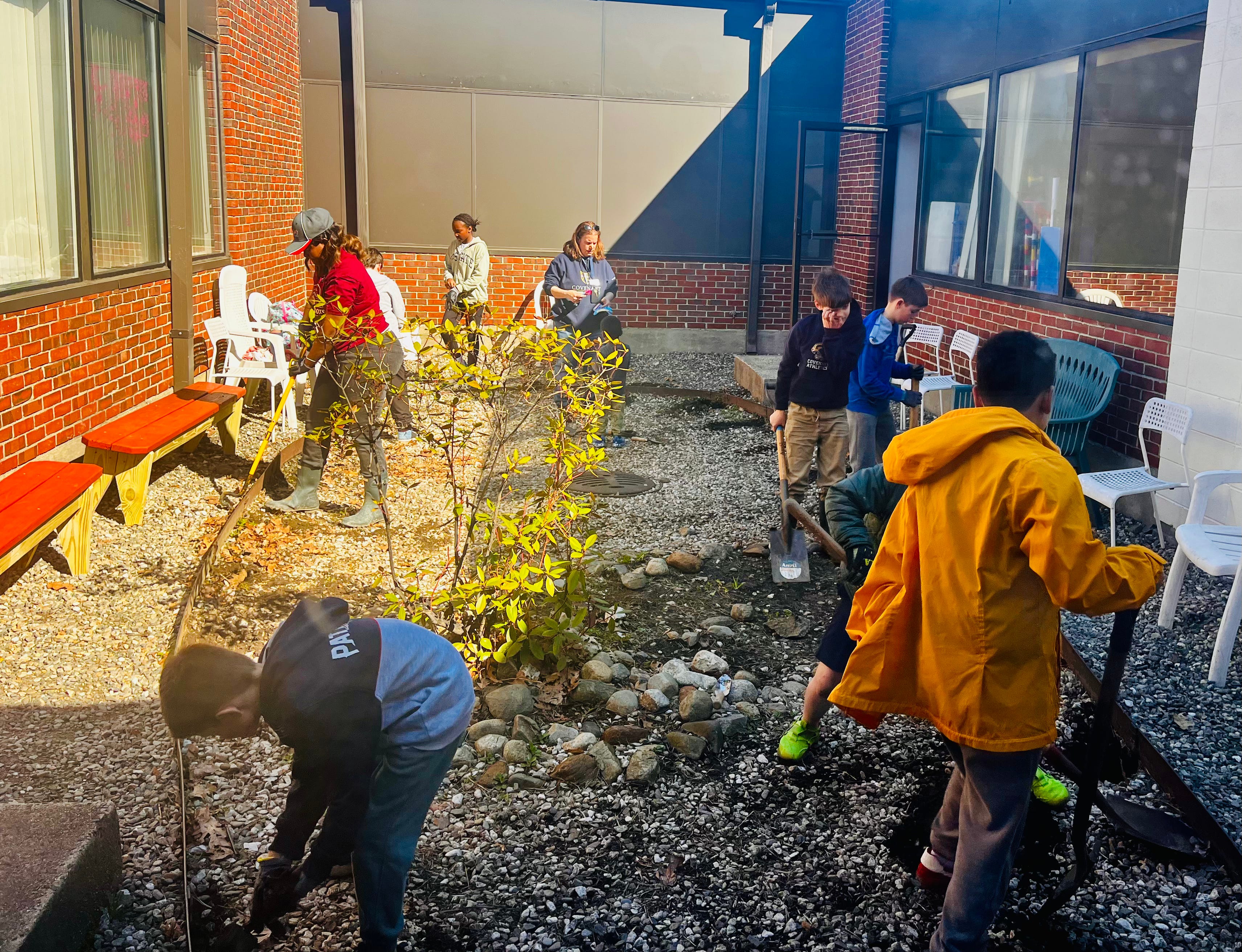
This past Saturday was the spring volunteer day at school. It was a crisp, bright, quintessentially April day full of high, fast-moving clouds and the smell of sun on grass, mud, and evaporating rain, and dozens of friends and families from the school turned up to beautify the campus. I’m beginning to see beauty as one of the primary tasks of the Classical Roots Program. It’s not the same thing as goodness, but it sure isn’t a bad thing, and it’s painfully, disastrously absent from the average student experience in America. We therefore went to work, with saws, mattocks, shovels, wheelbarrows, and an ambitious pile of pine mulch, in an attempt to add that much more beauty and flourishing to the school—or at least to subtract some ugliness.
I’ve recently been working my way through Russell Page’s meditative, lyrical, and often mysterious autobiography The Education of a Gardener. Page was one of the preeminent landscape designers in England and Europe for the better part of the twentieth century, but his great book on gardening reads much less like a practical guide and more like philosophy. He’s less concerned about what you should plant where, and more in tracking the confluence of historical, social, and practical forces as they contribute to the landscapes we see all around us, especially in public parks and on great estates.
One particular passage has haunted me particularly:
“If you wish to make anything grow you must understand it, and understand it in a very real sense. ‘Green fingers’ are a fact, and a mystery only to the unpracticed… green fingers are the extension of a verdant heart. A good garden cannot be made by somebody who has not developed the capacity to know and to love growing things.”
You Might Also Like:

My goal is not to make every student at our school a gardener—but it is certainly to give each of them an opportunity to become one. Good teaching is often a matter of efficiency: given all of the variables of class size, personal disposition, the strictures of the calendar and the inevitability of standardized tests, we look for the best way to convey what we need to teach to the largest number of people. And it’s with a teacher’s eyes that I started the Classical Roots Program, because the generation that’s currently in school is facing an epidemic of dissociation, and the best tool on hand for combatting this issue happens to be a gardener’s trowel.
For proof of concept, all I needed was to look around on Saturday at all of the flushed, sunny, satisfied faces of all ages that had gathered around the mulch-pile, the courtyards, and the baskets of tools. To plant something is an act of hope, and to tend it is a celebration of all embodied things. It was the sort of day that reveals the post-human digital age rhetoric for exactly what it is: a crock. A little sunshine will make its twisted logic dissolve like so much autumn fog over a field.
I drove home tired and dirty, but beginning to understand what Russell Page meant by a verdant heart.
If you enjoy what you’re reading here and want to support us, why not subscribe? It’s free to all and you’ll get access to our weekly posts, as well as a weekly subscriber-exclusive chat where we brag about our gardens and beg for advice. It’s the best way to support us.
Want to support the program and look great, too? Check out our Squadlocker store for exclusive merch. All proceeds go to fund future Classical Roots projects!
I find that quote at the end especially motivating - it reminds me of the point Billy Collins makes in "Introduction to Poetry" about the loss of wonder and curiosity about the nature of things when people try to learn about them.