
The Generosity of Trees
A second season of abundance
Classical Roots is a free weekly newsletter. If you want to support the cause, the best way you can help us is to spread the word.
I used to think of October only as the quiet winding down of the growing season: a time when the main activities in the garden involved cutting and composting the tattered, frostbitten remnants of the year. And there is plenty of that to do: this morning, the Classical Roots class and I will be taking the summer’s “Kentucky Wonder” pole beans—which are now little more than dry coils, hard as old roots—down off of their trellis, saving a few seeds, and collapsing the pole structure to be stored and rebuilt next spring. There will also be soggy hay bales to compost, leafmould to make, and fences to repair; the typical autumnal stuff.
But a recent revisit to a book my wife gave me for Christmas a few years ago, Carol Klein’s Grow Your Own Garden, has gotten me thinking very differently about October. When I first cracked the book, I simply wasn’t ready to absorb all that it had to say. The busy rhythms of the gardening year were still a complexity that hadn’t mellowed into instinct, and the many propagation strategies she details in its pages were like so much Sanskrit to someone who couldn’t yet fluently read even the more basic details of the year.
But now, a little older and a little more experienced, I found Klein’s book a treasure trove. Some of her most extensive sections detail the propagation—i.e., multiplication—of trees, shrubs, and roses through the taking of hardwood cuttings. Hardwood cuttings are six-to eight-inch lengths of straight, robust stem or branch from a plant. These are the counterpoint of softwood cuttings—smaller lengths of tender green growth, typically harvested in spring or summer—and are taken in the fall. If you know how to locate a leaf node on a branch, have a shrub or tree you like, and can cut healthy branches from it with a clean, sharp pair of snips, it’s very easy to take hardwood cuttings.
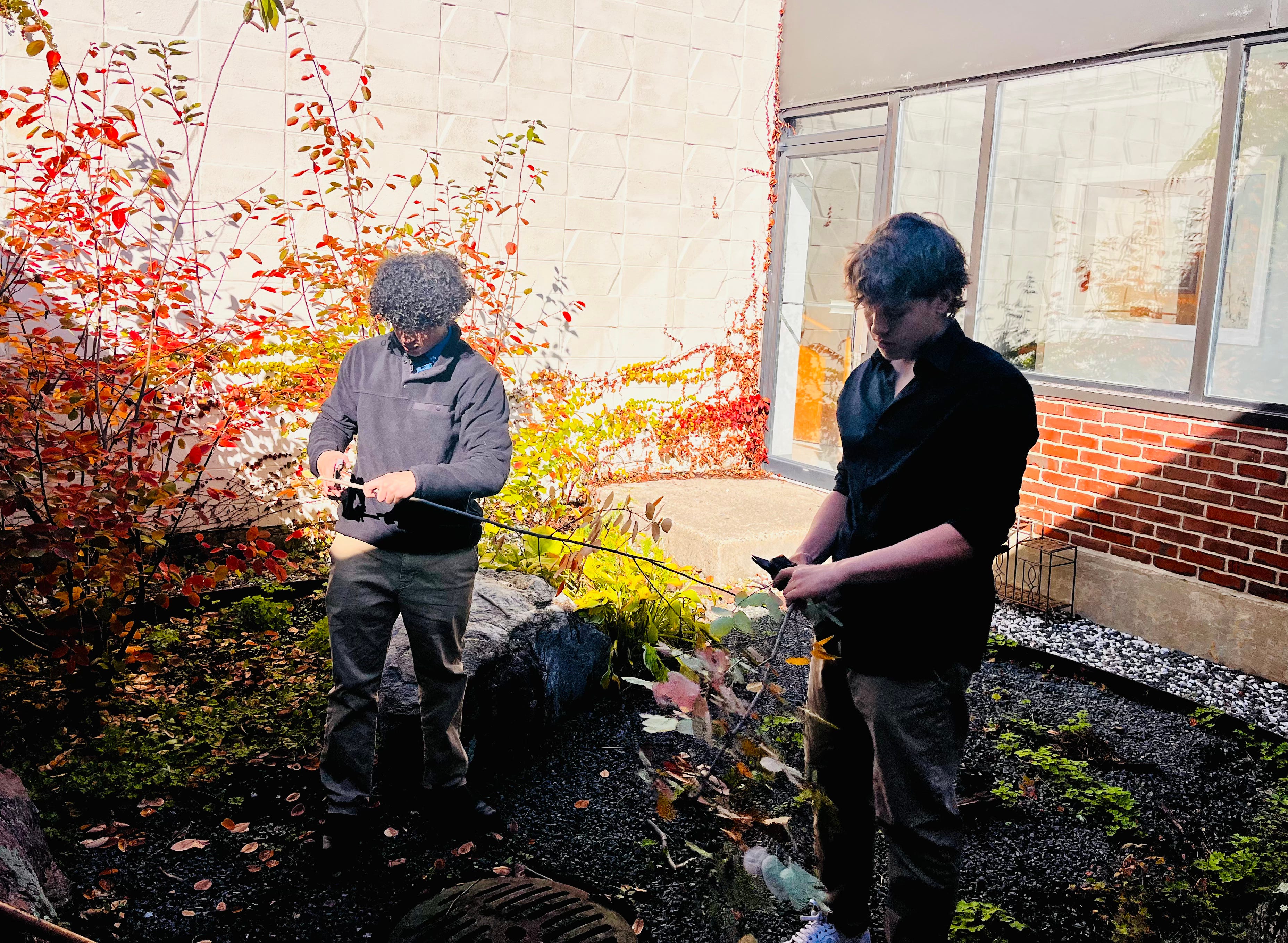
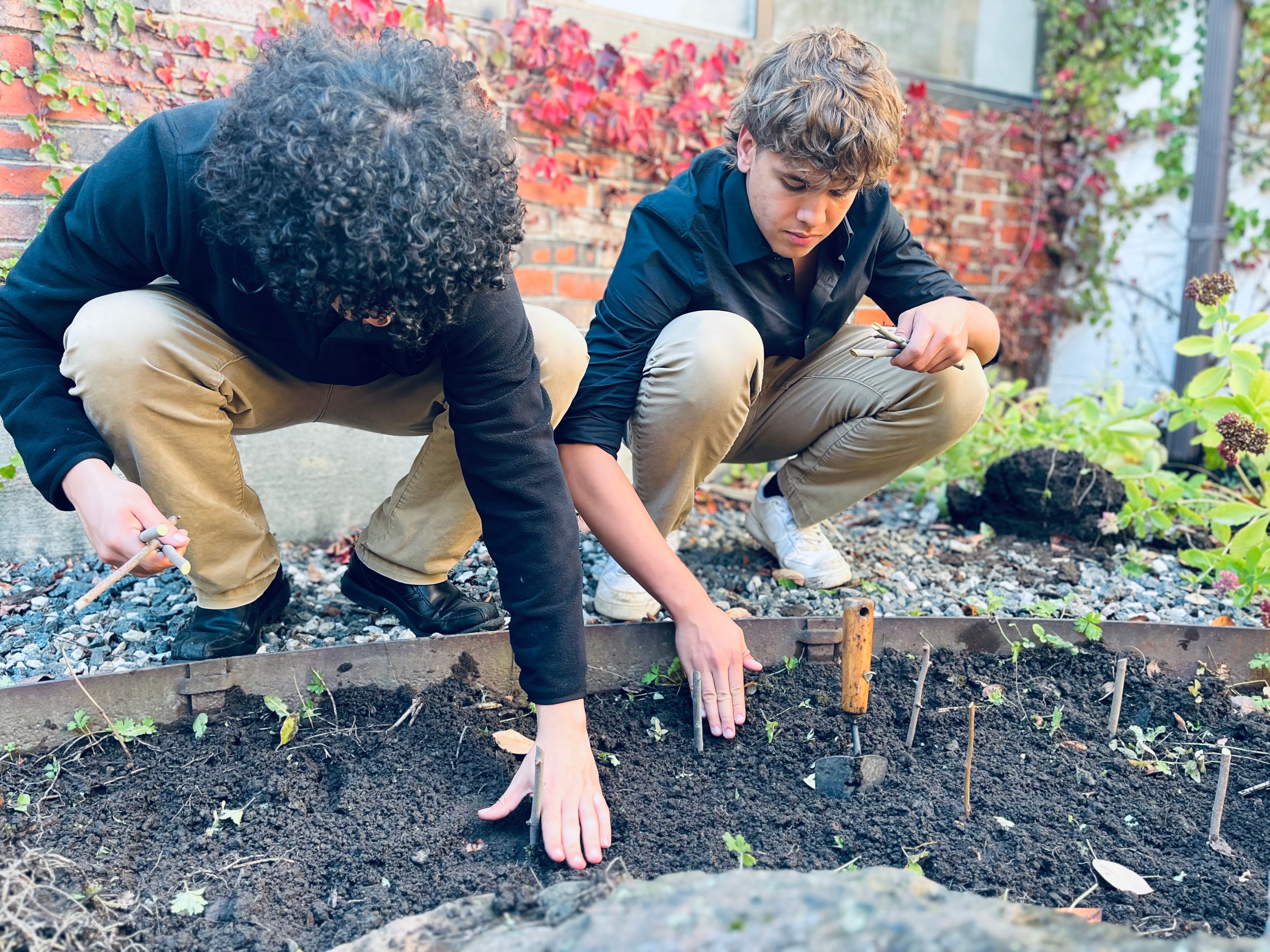
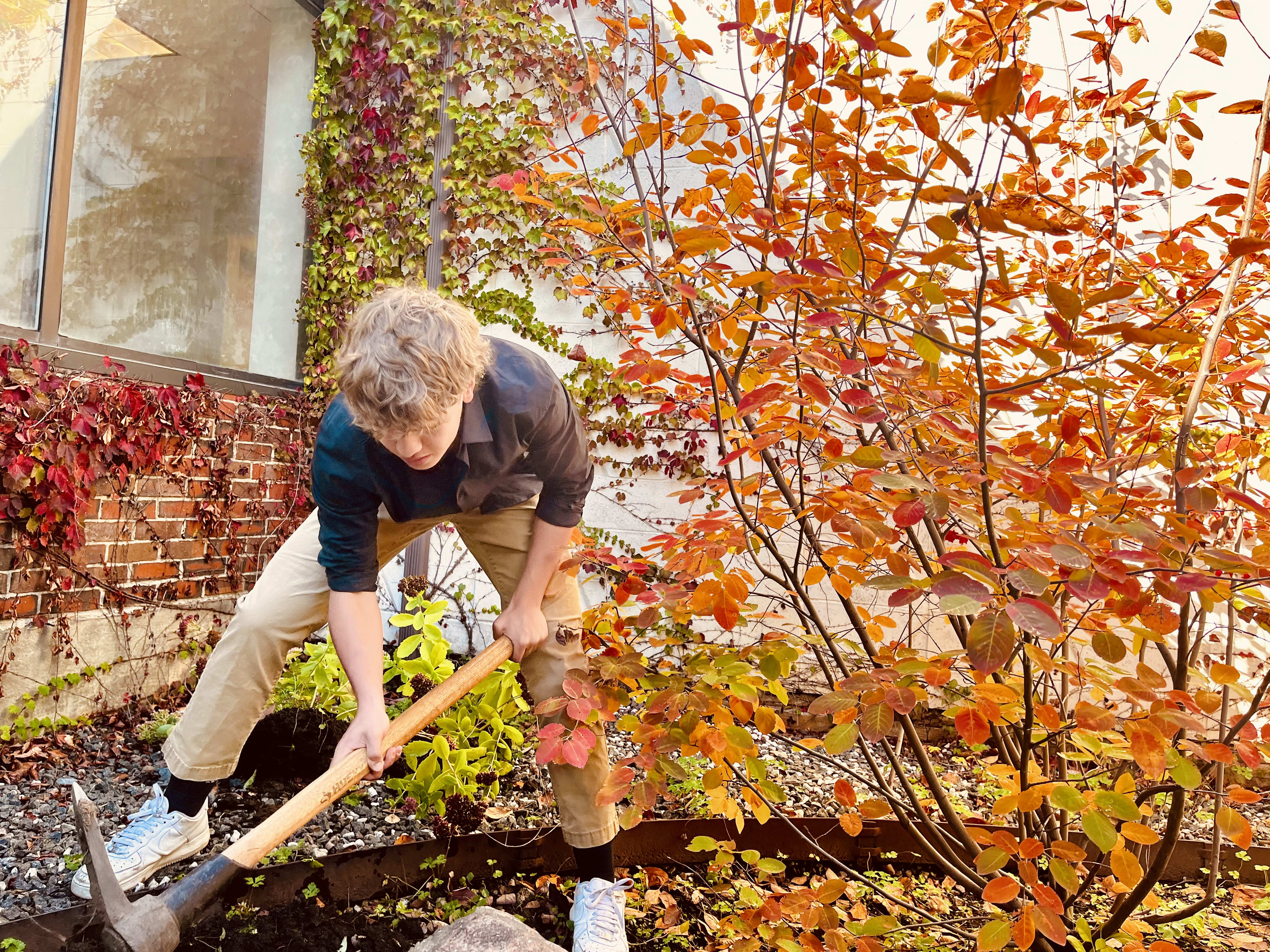
Two of my students and I took ten such cuttings in just an hour from some serviceberries we have growing in a courtyard. We prepped a stretch of open soil right next to the existing trees, took our cuttings, planted them in rows, and watered them in. By next spring, they should be leafing out and, a year from now, most will be healthy saplings, ready to be transferred to new locations around campus. And if we want to make more serviceberries, we could also take cuttings from those, perpetuating the cycle indefinitely, all for no cost, apart from time and labor.
You Might Also Like:
Many other plants can be similarly multiplied this time of year: irises, peonies, chives, daisies, sedums, and dahlias, to name a few. Once I’d absorbed the general principles, I found myself dividing, cutting, propagating, and replanting dozens of things around school and in my home garden: the process took up a whole crisp Sunday under the clear sky.
As I did this work, bent over the turned earth and falling into the rhythm of it, I realized that October, too, can be a season of business and abundance—a consolation for gardeners, who get very restless to be doing something once the initial pleasure of an idle season wears off, and the long cold of winter barrels toward us. The joy of planting something, and watching, and hoping for its flourishing, doesn’t need to be reserved for April and May. And rich borders of shrubs and trees don’t need to be reserved for those who can afford to drop thousands at a garden store: the trees are very generous, once you get to know them.
If you enjoy what you’re reading here and want to support us, why not subscribe? It’s free to all and you’ll get access to our weekly posts, as well as a weekly subscriber-exclusive chat where we brag about our gardens and beg for advice. It’s the best way to support us.
Want to support the program and look great, too? Check out our Squadlocker store for exclusive merch. All proceeds go to fund future Classical Roots projects!