
May Garden Advice
...every tree spreading its green and variable canvas...
Classical Roots is a free weekly newsletter. If you want to support the cause, the best way you can help us is to spread the word.
There’s a giant maple tree in the northern distance beyond our house. It’s one of those trees that instantly strikes us as having a personality, even a natural authority—a guardian spirit of the neighborhood. And it would be visible from our back porch, except for one low, awkward branch that has jutted from the trunk of a black walnut tree ever since we moved in ten years ago, maddeningly blocking what would otherwise be a perfectly framed view. In my darker moments, I’ve considered all sorts of schemes for getting rid of that branch, from a jerry-rigged twenty-foot pole saw to bribing tree crews who happened to be in the neighborhood into cutting it down. None of these schemes was ever actualized, but that walnut branch has itched my mind for a decade.
It wasn’t until last month, as I reopened up and raked out the garden after a brutal and stormy winter, that I unbent from my tasks, looked outward, and realized that the snow had pulled down the branch sometime in February. From anywhere in my yard, we now had a clean, well-framed view of the maple’s majestic sprawl. I’ve taken my first cup of coffee on the back porch almost every day since, savoring its distant, silent, unquiet movement as it catches the eastern sun, a movement that has changed character day by day from jagged to billowy as its leaves budded out and unfurled. This morning—and some version of this always happens to me in May—I realized that every tree in sight was now spreading all its green and variable canvas, that the well-framed maple was crowned with light just catching the topmost branches, that the smell of apple blossom—the best scent of the year—was creeping over rain-freshened grass and that, in short, spring had truly come.
You Might Also Like:
With spring comes an endless number of tasks. But here are a few to keep in mind this month:
1/ Plant Out Tender Veggies
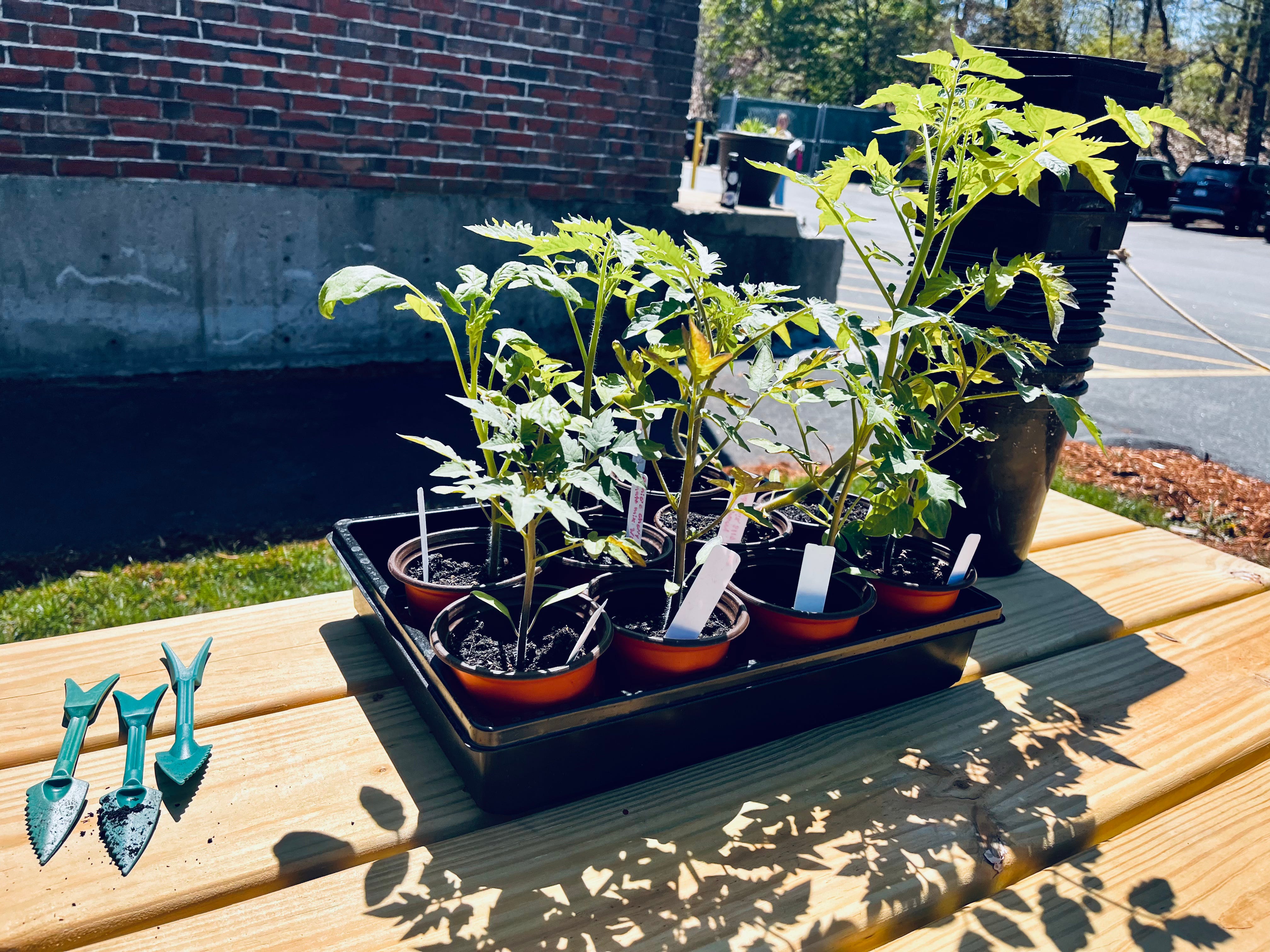
It’s in May that the differences in frost date between the northern and southern parts of the country are the most stark: my family and friends in North Carolina are planting zinnias and tomatoes while it’s still snow pea season here. But, even in New England, this month will see the last frosty mornings gone, meaning it’s time to plant out tender vegetables like squash, tomatoes, and pole beans. Thanks to our new cold frames, we’ve been able to grow all of these from seed this year at the school, and they’ve been gradually hardening off as the days have warmed. The frames now stay open all day and are only shut at night, but soon I will either keep them open around the clock or move most of what’s there out of the frames and into a relatively sheltered space for a day or two before finally planting them out and watering them in. This process always involves instinct and guesswork, and no plan is foolproof but, with luck, they will experience no shock at all when they go out into the garden proper and will therefore start adding healthy growth right away.
2/ Dead-Head and Divide Daffodils
The daffodils have now pretty much gone over, their blousy petals fading and dropping off, and leaving a swelling seed head in their place. If you want to spread out larger clumps of them and multiply your holdings, now is the time: simply dig them up, pull apart any corms that have branched off from the larger bulbs, put the old ones back in their place, and plant the new ones wherever you want them, allowing the green stems to stay above ground and die back naturally, ensuring good nutrition for the young bulb and therefore good flowers next year. It’s also a good idea to cut off any of those swelling seedheads just at the neck, leaving the rest of the stem intact and thereby persuading the plant to send all its energy back into the bulb. If you don’t do this, the flowers will gradually weaken until, one year, you’ll get few or none at all.
3/ Support Peonies
Nothing signals summer’s true beginning like peonies, whose brief but fantastic display is always at its height in our garden on Labor Day weekend. At the moment, the plants are still only sending out reedy red shoots but, soon enough, the buds will begin to swell, inevitably attended by ants who crawl all over them, drinking the sweet dew that’s squeezed out by the pressure of their unfolding. You should leave the ants alone—they feed birds, among other things—but you should also provide support for them now. The rule with plant support is that you should always install it before you really need it. Otherwise, a windy spring storm will flatten and damage the stems, with season-long implications. There are a hundred things you can use to support Peonies, from top-fruit branch cuttings to specialized frames, but I’ve found that the cheapest, easiest, and most effective supports are two bamboo stakes driven deep at a slight outward angle on either side of the plant to about two-thirds of their mature height, with garden twine wound around the stems between the stakes. The resulting shallow diamond pattern is strong, light, and will eventually disappear into the greenery as the foliage and blooms mature. And, though the blooms are brief, the foliage of peonies is fantastic, with rich summer green and superb autumn colors, especially if it’s well-supported throughout the year.
If you enjoy what you’re reading here and want to support us, why not subscribe? It’s free to all and you’ll get access to our weekly posts, as well as a weekly subscriber-exclusive chat where we brag about our gardens and beg for advice. It’s the best way to support us.
Want to support the program and look great, too? Check out our Squadlocker store for exclusive merch. All proceeds go to fund future Classical Roots projects!