
Just Do Real Things
We have the tools to help the modern teen.
Classical Roots is a free weekly newsletter. If you want to support the cause, the best way you can help us is to spread the word.
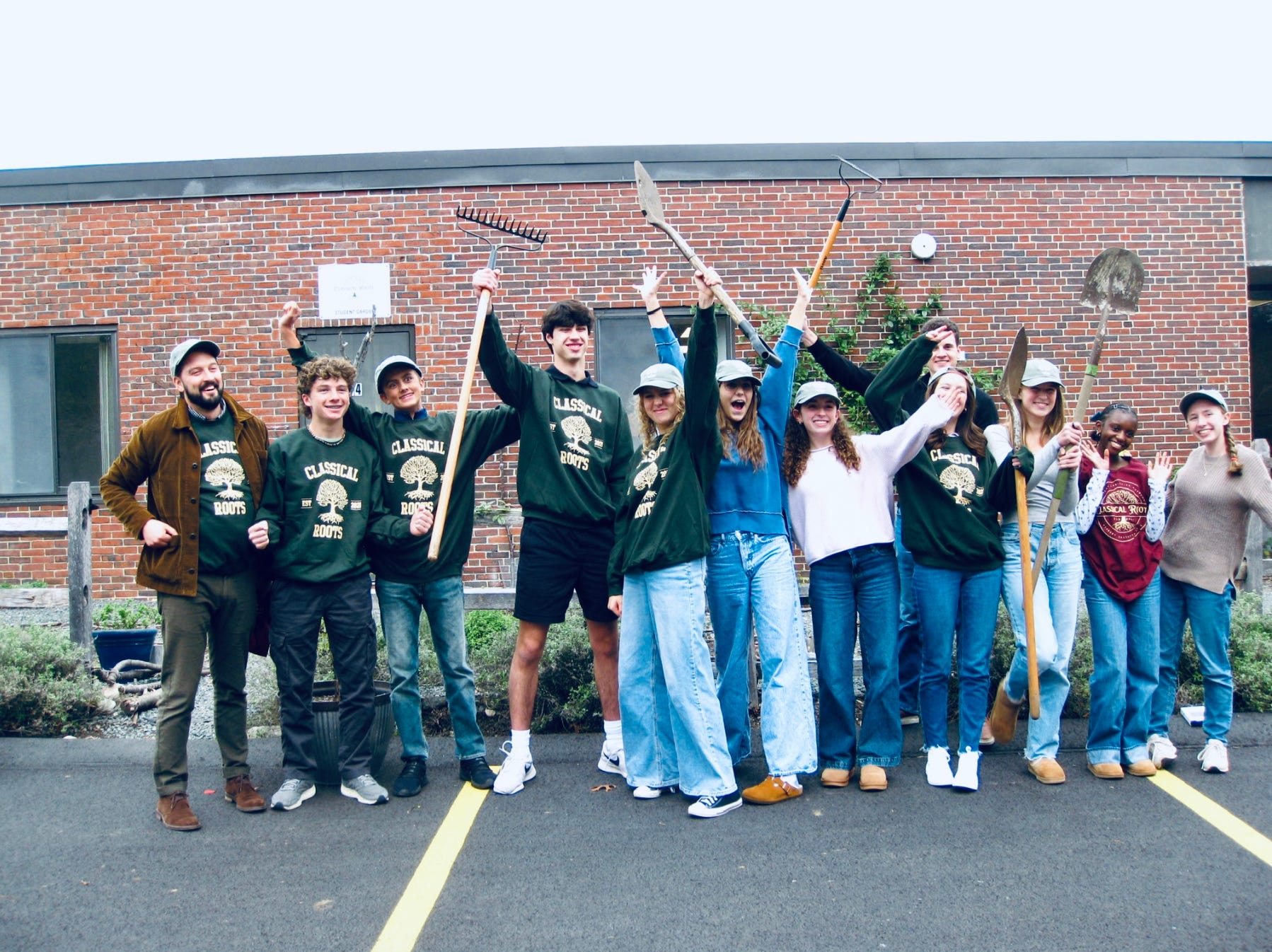
I’ve been involved in quite a few conversations recently about the plight of the modern teenager. Understandable, I suppose, since I work in a high school and started the Classical Roots Program, which most people (correctly) assume was formulated partly to redress some of the problems facing that particular group. Jacques Barzun, the mid-century French-American cultural historian who wrote Teacher in America, once said something like, “Whatever the culture at large can’t manage to do for its children, it will ask of its schools.”
It’s a harsh critique, but our collective tendency to ask schools to fill the gaps of our parenting is understandable since, after all, school usually forms that vital “second place” away from home and parents, where the other part of our inculturation has to happen. Still, it’s perilous to assume that any group of people, no matter how qualified, will be able to do for a child what their parents can’t. The family is an order of magnitude more powerful than any other influence in a child’s life, and to ask the school to address the family’s failures is like using a pair of scissors to go after an oak that a chainsaw couldn’t cut down.
Nonetheless, the shelves of modern bookstores are crammed with theories about how school has to change to meet modern teens where the moden world has made them uniquely vulnerable. Most of those theories are self-justifying bunk, while some, like Jonathan Haidt's The Anxious Generation, are essential reading. I am no more a qualified educational theorist than I am a trained horticulturalist but, for what it’s worth, I am morally convinced that I have a firm grip on one piece of the puzzle when it comes to lifting modern teens out of the quagmire of depression, anxiety, suicide, and meaninglessness into which the techno-mages have plunged them: Just do real things.
I’m aware that I’m being obvious here. Anyone who has looked into the issue of teen depression and anxiety knows about the abundance of qualified research that suggests that regular physical work and practical tasks dramatically alleviate some of the broader symptoms that haunt the modern teen, diagnosable disorders notwithstanding. You can read more eloquent voices on that subject elsewhere.
But what is perhaps less obvious is how programs like Classical Roots might fit into a more general strategy, easily adopted by public and private schools alike, for improving their educational effectiveness. Here at CCA, we not only want to make Classical Roots flourish, we want to dial in on a repeatable model that we can teach to other schools.
You Might Also Like:
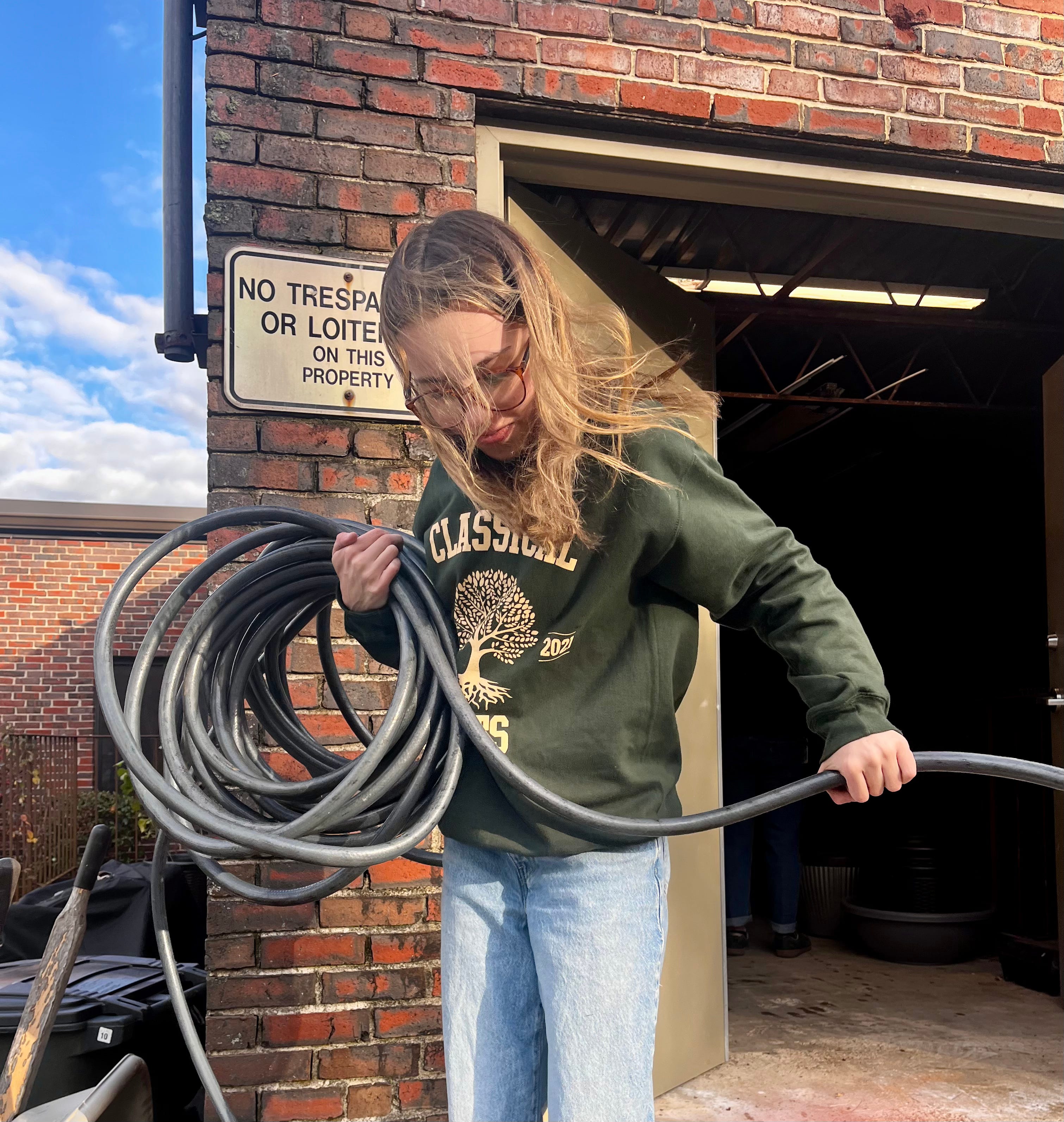
What might that model look like? It all boils down to getting kids doing real things: start a garden, and give students time to tend it. Start a composting program, and train students to educate others about it. It’s all very promising, so why isn’t it more popular? In my experience, when programs like these fail, which many of them do, it is usually for one of two reasons:
First, the program fails because it is extracurricular instead of curricular. Regarding it as a club or “extra” instead ofan integrated program (parallel to an athletics program) will not only mean it will lack essential funding, but that the necessary hand labor to make it thrive will never get done. If it is going to start as a club (as ours did), it needs to become more than that pretty quickly. This urgency exists because the school needs to send the message that this sort of practical work, which puts you in touch with the cycles of the natural world, is a core part of what it means to be educated. That idea is not new; we have simply lost touch with it. Starting a gardening club might seem like a good way to close the gap, but it is usually not enough long-tem. The school needs to commit to regarding agriculture as a core curricular and programmatic identity. Our has done so, which is why it is working.
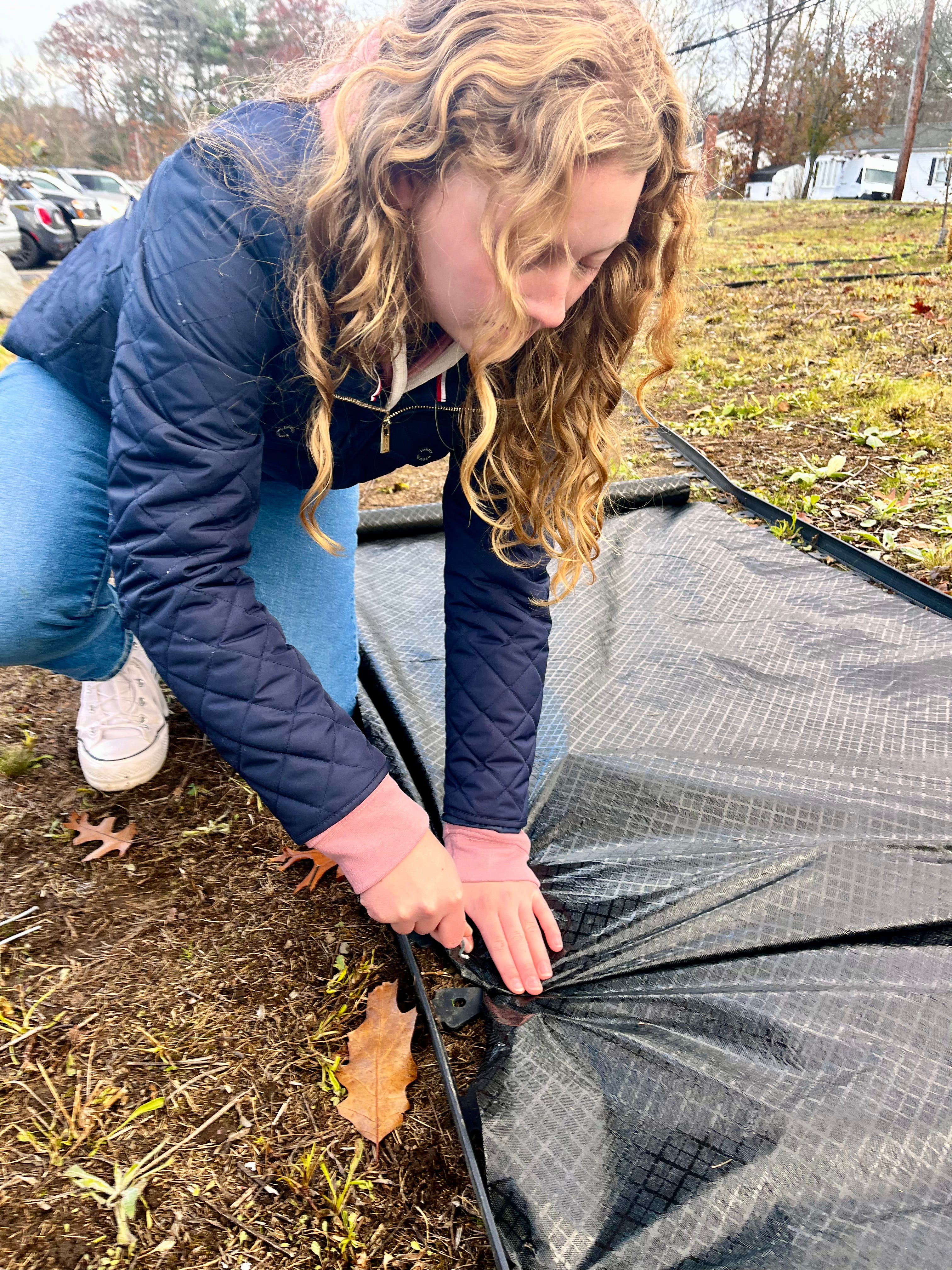
Second, the program fails because the students involved in it aren’t given real autonomy. We all know that there’s nothing more poisonous than a classroom where the students, under the guise of “open discussion,” are always actually being pushed toward some foregone conclusion, already in the teacher’s head, which constitutes the only “right answer.” The illusion of freedom is actually more restrictive than an explicit lack of control. “Real work” programs like Classical Roots are threatened by an analogous danger: a needling faculty and administrative control that makes them merely laborers and not collaborators.
If you are going to create gardens, compost heaps, decorative borders, or orchards on campus, it needs to be something the students are doing with help from the faculty, not the other way around. This is a subtle distinction but a vital one. We addressed it with our Prefecture, and the Prefects really in charge of things. Real work comes with real authority, and the students have to be trusted to make mistakes. If you ever come to CCA’s campus and take a look at the paths in our orchard, you’ll see they follow some quirky and unpredictable lines. If I had wrestled control of the whole process from the students who were in charge of laying down these paths, we would have ended up with very clean lines and very jaded students. And jaded students are exactly what we’re trying to avoid. Jadedness leads to isolation, which is a form of despair.
Avoiding these failures matters. But, even if you aren’t an educator and none of this advice directly applies to you, you should do everything you can to do real things with the teenagers in your life. Give them axes, saws, shovels, and creative license. Let them chop down trees. Apart from our collective loss of a belief in something higher than ourselves, the biggest tragedy of modern education is that we’ve treated students like brains in jars, whose only educational imperative is to absorb information. But information can’t soothe the soul, or ease the restless mind. The reason why teens are depressed is that their world doesn’t feel real. We can’t solve that sense of pervading artificiality with better classroom management or sharper curricula. We can only fight the artificial with the real.
If you enjoy what you’re reading here and want to support us, why not subscribe? It’s free to all and you’ll get access to our weekly posts, as well as a weekly subscriber-exclusive chat where we brag about our gardens and beg for advice. It’s the best way to support us.
Want to support the program and look great, too? Check out our Squadlocker store for exclusive merch. All proceeds go to fund future Classical Roots projects!
Well said...it was a natural progression for iphones to replace gameboys and tv's as the prefered form of entertainment to occupy children. Grateful for a voice of reason attempting to move things in the other direction encouraging parents to re-engage their kids with real activity.