
Growing Lettuce
(That won't kill you)

Classical Roots is a free weekly newsletter. If you want to support the cause, the best way you can help us is to spread the word.
One way to save money during an affordability crisis is to wake up at the crack of summer dawn and drag the whole family to the less expensive grocery store. We did that recently, crossing the nearly empty parking lot under a blue haze and the kettling gulls that roost on the huge flat roofs, already squabbling and hanggliding on the thermals. It had been a bit since I’d stalked the aisles of this particular Market Basket, but all was the same except for one thing: the entire climate-controlled shelf where the lettuce should have lived was empty. A sign of the times, as if greedy doorbusters had ransacked the romaine.
The actual reason, of course, is that a pretty serious parasite has found its way into this particular branch of the North American food supply, a parasite that is usually transmitted via human feces (hardly a comforting thought), and has apparently killed at least two people in Michigan. Much could be said about the way this situation reflects on our agricultural processes. It is, I fear, likely to become a more common narrative if we don’t make some changes to the way we interact with industrial farming. The future, I have heard, is agrarian, but then so is the past. The question is not if we will keep farming food, but how, and at what cost to creation and consumer.
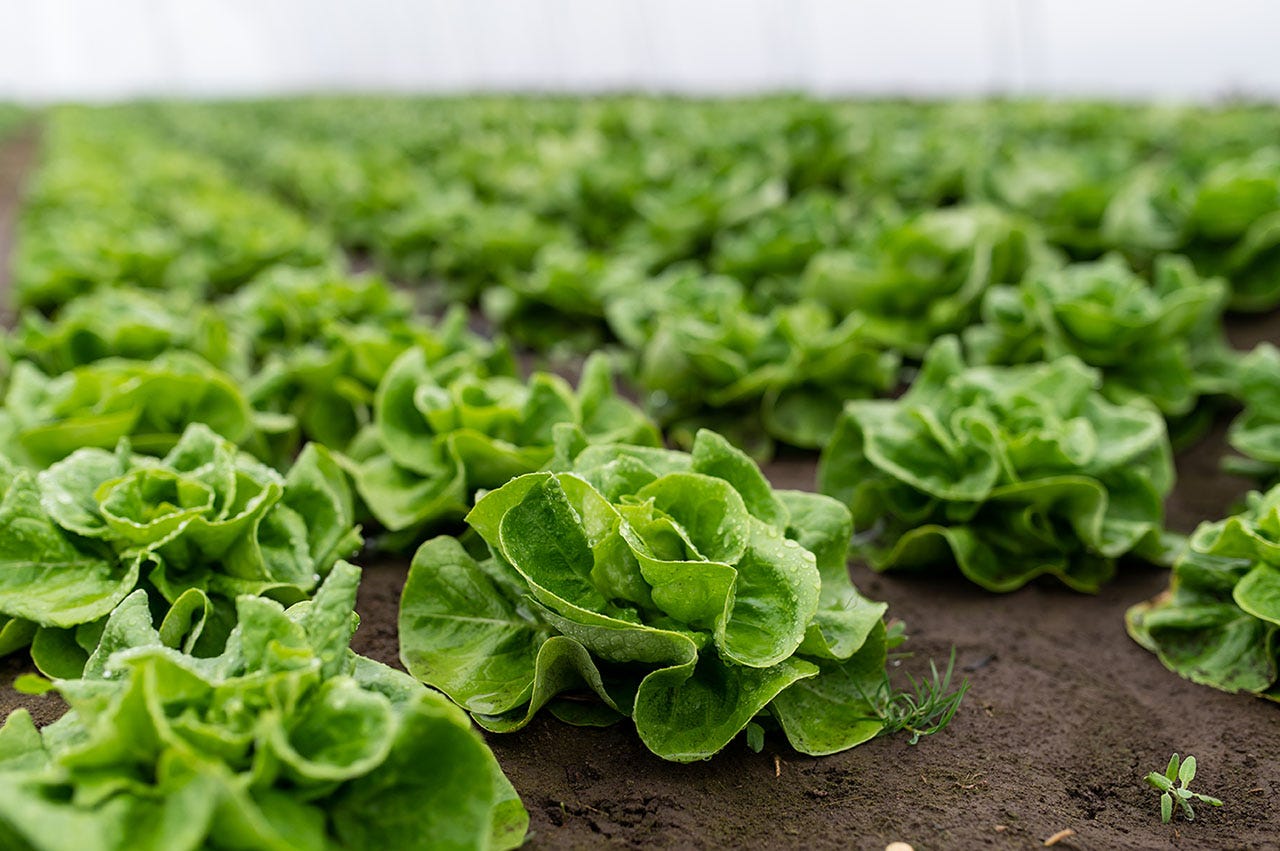
In the meantime, I have good news: lettuce is dead easy to grow. You don’t have to rely on local grocers to get it, though you could always grab a bunch at your nearest farmer’s market. But as your domestic correspondent on all things home-garden-related, I decided to get a bunch of lettuce seed and experiment with three different ways of germinating it to see which one the average person would find easiest. It is not at all too late, by the way, to sow lettuce even in the northern parts of the country: start some now and you’ll have a fine early autumn crop that will taste like a revelation and—here’s the kicker—won’t send you to the hospital with explosive diarrhea.
You Might Also Like:
Mediterranean Herbs

This morning, students shielded themselves under three-ring binders and jackets while they darted into school under a wild late-winter rain. Driven north by warm southern wind, the rai…
I tried direct sowing the seeds in the garden, sowing in a seed tray, and sowing into cells under grow lights. Though trays and cells both work better in early spring, since they provide levels of warmth and light that aren’t naturally available, I’ve found that overwhelmingly the best option in July or August is direct sowing. The world is currently abundant with moisture and light, and there’s no need to create it artificially. Simply grab some seed online or at the local store, find a sunny spot, and use a stick or a trowel to scrape two or three narrow trenches about six inches apart and a quarter inch deep, and sow the seeds very thinly, every six to eight inches or so. Avoid the temptation to sow lots at once: try nine or twelve now, and the same number again in three weeks. Keep the soil evenly moist and thin the seedlings that have crowded together by pulling the weaker ones when they appear. That’s about it. Lettuce also grows great in window boxes or pots, meaning that any amount of space is enough. It will be ready to eat by October, which is not too long to wait for something as fresh and satisfying as home-grown food. If you have access to a little fleece or even a makeshift cloche, you can extend the harvest into December.
Why bother with this? There are practical reasons, of course, but those are the lesser ones. The greater ones have to do with rituals, with satisfaction that goes beyond mere fullness, and with developing a sense of connection to the landscape around you. There is something mystical—I can think of no other word for it—about eating from your home landscape, even if that landscape is an apartment balcony or a window box. It closes the loop of living in a place, keys you to the local rhythms and conditions, and gives you back a shred of the human inheritance: the right to a passionate and delicious exchange with the earth, something that feeds and shapes both of you. And this much I can guarantee: a barefoot nip out to your own garden, coffee in hand, under trees soaked with early light, beats the heck out of a seven-am run to the grocery store.
If you enjoy what you’re reading here and want to support us, why not subscribe? It’s free to all and you’ll get access to our weekly posts, as well as a weekly subscriber-exclusive chat where we brag about our gardens and beg for advice. It’s the best way to support us.
Want to support the program and look great, too? Check out our Squadlocker store for exclusive merch. All proceeds go to fund future Classical Roots projects!