
February Garden Advice
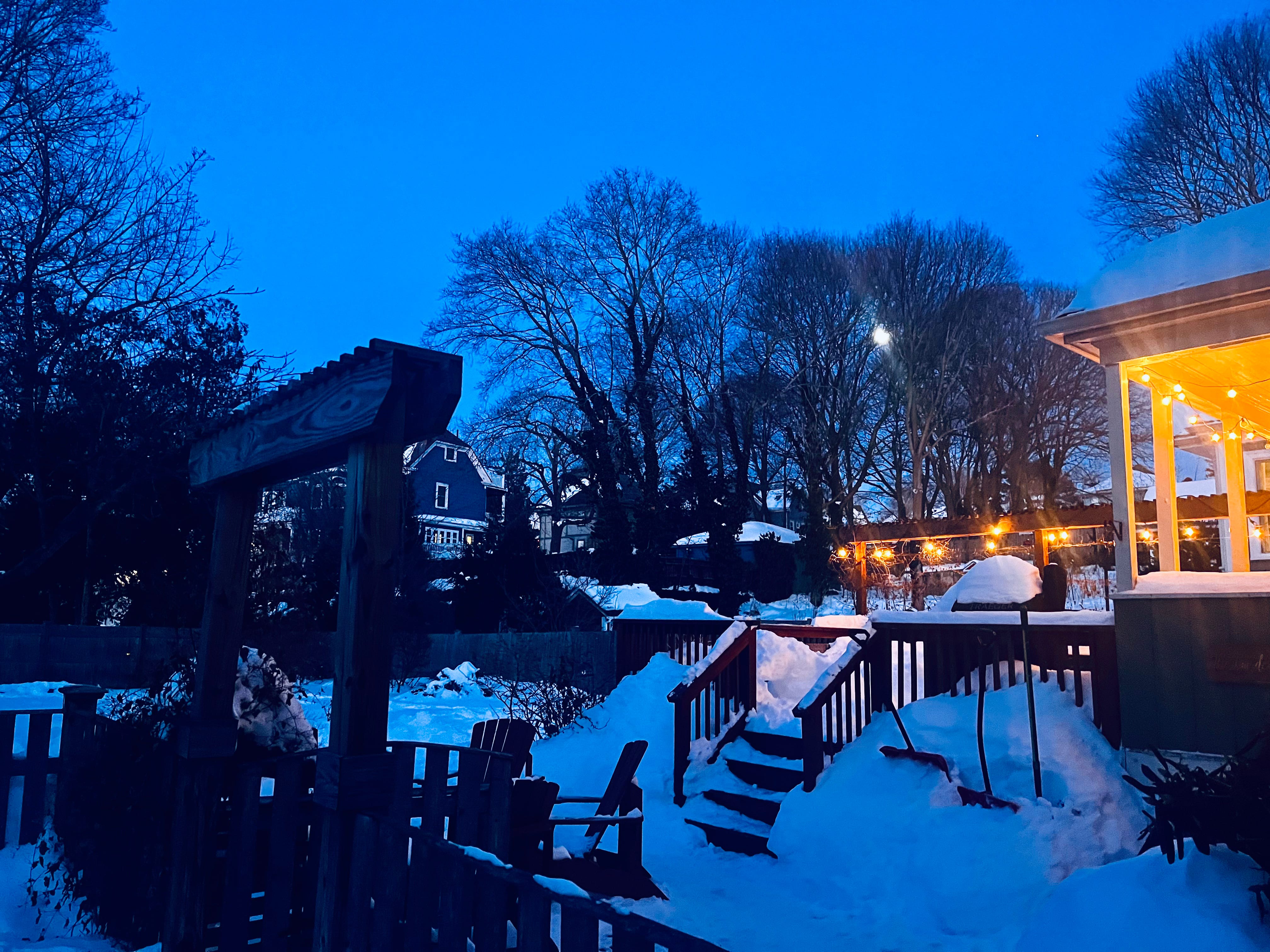
a lunar tableau
Classical Roots is a free weekly newsletter. If you want to support the cause, the best way you can help us is to spread the word.
One evening last week, I crammed on a wool hat after the kids were tucked in and went out, swinging my salt bucket, to clear the section of the driveway that leads into our backyard around the house. This was not a moment where the winter-lover in me felt braced and refreshed by an encounter with raw nature and the stark outlines of bare trees. I am not, as far as I know, capable of poetic reflections once the wind chill drops below zero. Shivering and cursing, I shoveled, scraped, heaved, and trudged, fighting my way from the front of our icicle-toothed house to the back, through a landscape that had become borderline-unrecognizable, a lunar tableau of heaped snow, shivering gray, and blue moonlight.
My foul mood wasn’t to last long. When I reached our back gate, I found the full moon rising through the trees on the hill to the northeast, an orb of honey-colored glow hanging in a cobalt sky. The wind rattled the sticks but, for a moment, it was hard to feel cold—to feel anything but pure exhilaration. The restless silence of the scene no longer felt alienating, but wild, rugged, and moving.
The next day, more snow came, and my boys insisted on gearing up and getting outside. Another nine inches of powder on top of the existing twenty-five meant that even my youngest could safely jump from the porch railing into the drifts, yelling “CANONBALL” as he plummeted. Arching my neck out the window to check that all was well with the boys, I heard the most improbable, scaldingly nostalgic sound: the spring mating call of a Northern Cardinal, the song they reserve for courtship, an uncontestable signal that, despite the record snows and punishing temperatures that are making this winter seem eternal, spring is inexorably on its way.
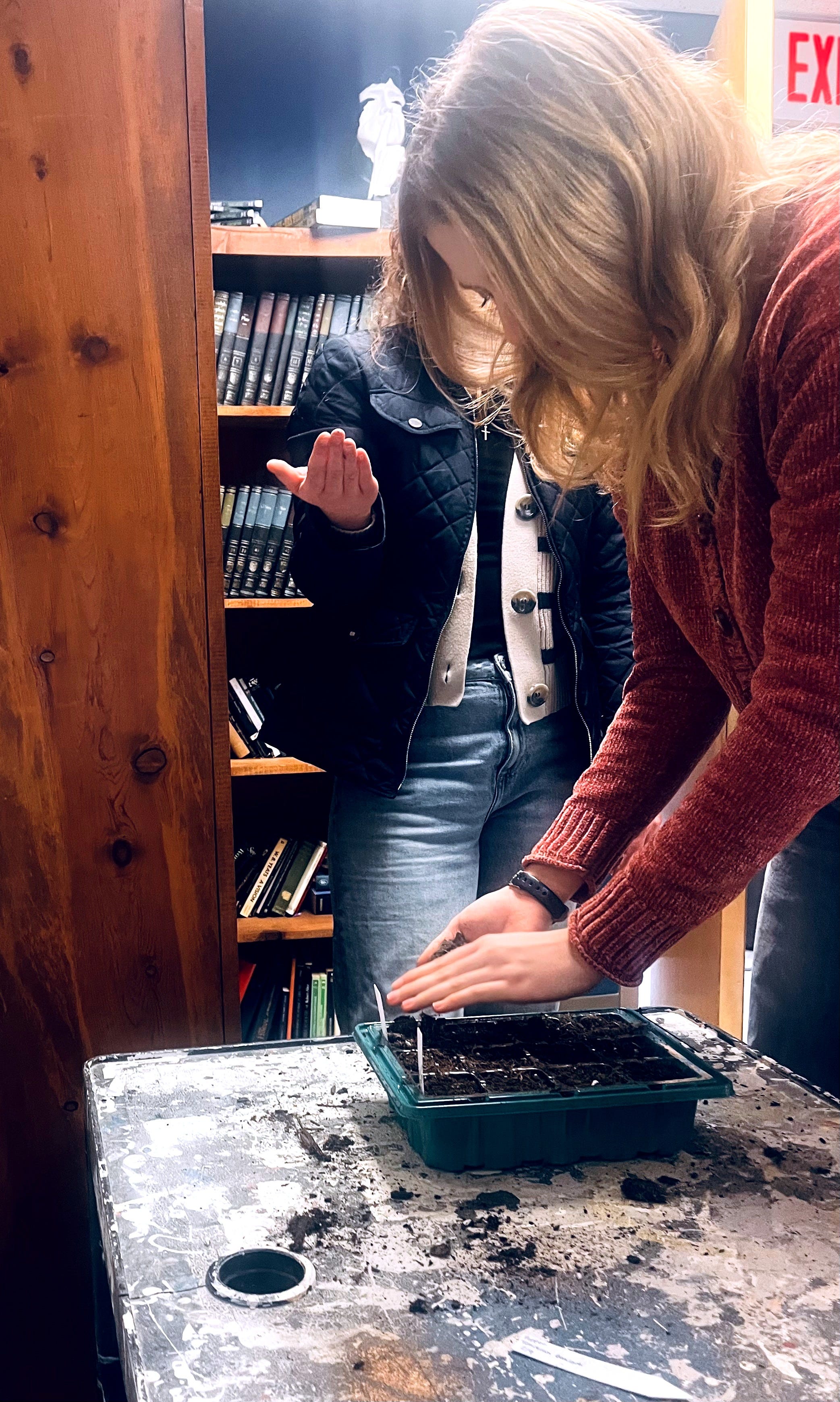
Back at school, my Classical Roots students and I dug out the site for our future cold frames, unboxed our new climate-controlled seedling trays, and sowed hot peppers and parsley. Doing so gave me an undeniable sense of lift. I grinned like a boy. It’s customary for many gardeners in Britain to sow hot peppers, which take a notoriously long time both to germinate and reach maturity, on the first of the new year. Our harsher North American climate, where frosts linger well into May, makes that ceremonious timeline inadvisable. But the second week of February is about the right moment for us, and with the sowing of the first seeds of the year, the sky seemed to tilt on its axis, the season imperceptibly to change. It’s no longer the time of planning and waiting: it’s time to start preparations for the cycle of growth and harvest that, for so many of us, is liturgy, beauty, and nourishment.
You Might Also Like:
Here are some tasks to get you ready for the coming growing season:
1/ Cut Back Ornamental Grasses
I’ve come to love and rely more and more on ornamental grasses, like the tall, wavy Calamagrostis x acutiflora “Karl Foerster” feather reed grass, as a key source of vertical structure and dun-yellow color in the winter garden. Their seedheads also make fantastic additions to flower arrangements in summer. But now, after so much winter weather and especially after snow, their stems have taken a battering and look shattered and sad. Late February is a good time to cut these right back to the tops of any fresh green growth you see coming through at the base, letting in air and light. Also, take a moment to see if any of your older grasses have begun to die back in the middle and form a ring of lusher growth around the center, a sign that the plant should be dug up in March or April and divided, with the weak center being discarded.
2/ Prune Roses
Roses are tough as nails and can survive nearly anything, so even the least experienced gardener shouldn’t be intimidated by pruning them. And now is the time of year to do it, when the ground is still cold and the sap hasn’t started to run. Remove any tattered, broken, or crossing stems and, for shrub roses, simply trim stems back to just above a bud, establishing the desired shape. Always keep in mind that, the harder you prune in winter, the more lush and vigorous the responding growth will be in spring so, if you are trying to even out a rose’s shape, you need to trim the shorter side back harder, taking only a little from the larger or longer side. Climbing roses should be pruned to create as many lateral stems as possible, with the side shoots growing vertically up—never down. Rambler roses, which are in relatively few yards and gardens in the U.S., only flower once in June and should not be pruned in winter, since they carry their spring flowers on last year’s growth.
3/ Sow Peppers!
If you like hot peppers, which we certainly do in our house, both as an ingredient and a garnish, now is the time to sow them indoors. These plants take a very long time to reach maturity and, of course, are not frost hardy. The big-box garden stores carry very few varieties of hot pepper, and they therefore provide an opportunity to experiment with the exotic and unusual, which will virtually always be more flavorful. Sow into a tray on a heated mat or over a radiator so that the soil stays at seventy to eighty degrees Ferenheight, setting two seeds per cell on the surface of the soil, then sprinkling a very thin layer of potting soil over them, patting them down, and watering gently but thoroughly. Thin to one strong plant per cell and pot them up once true leaves have appeared, hardening them off in May and not planting out into the open until well after any danger of frost has passed, which around here is usually June.
If you enjoy what you’re reading here and want to support us, why not subscribe? It’s free to all and you’ll get access to our weekly posts, as well as a weekly subscriber-exclusive chat where we brag about our gardens and beg for advice. It’s the best way to support us.
Want to support the program and look great, too? Check out our Squadlocker store for exclusive merch. All proceeds go to fund future Classical Roots projects!