
Buried
Losses in the orchard.
Classical Roots is a free weekly newsletter. If you want to support the cause, the best way you can help us is to spread the word.
I write this shivering in my house, where the furnace is broken. It’s fourteen degrees ferenheight outside, all of my faucets are dripping, and I’ve taken the morning off for the necessary meeting and negotiations with the plumber. Gardeners like to remind themselves—and each other—about the unpredictability of nature, the inevitable losses, and the need for patience. I find this sort of equnimity far easier to muster when it is nature that blindsides us, rather than a mechanical or logistical failure that has its ultimate origin in human effort. It is easier, in some ways, to bow before an act of God than the folly of man.
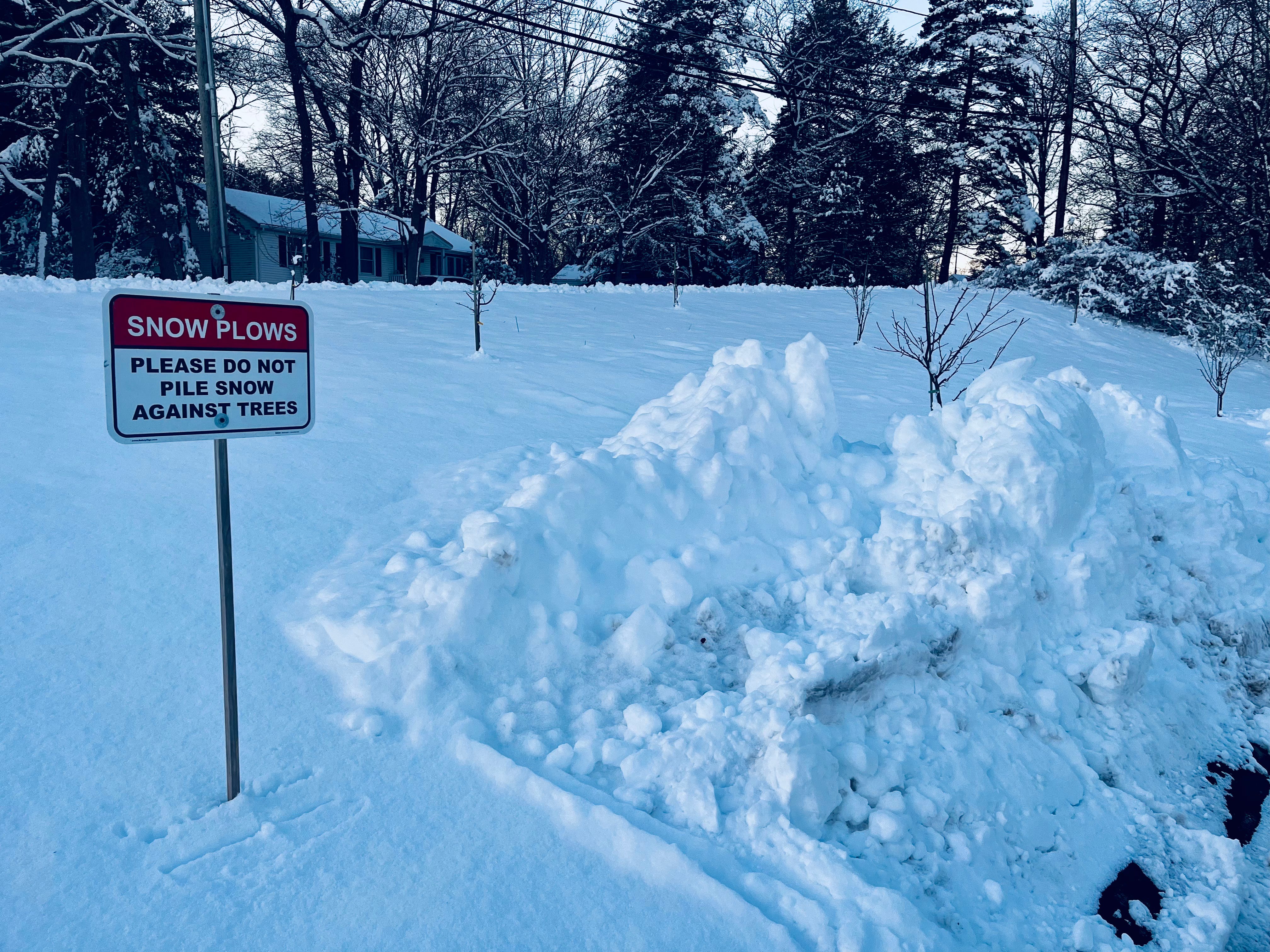
So far, for Classical Roots, 2026 has been a season characterized by foiled or failed human efforts. The massive storm that buried Massachusetts’ North Shore in twenty inches of snow last week brought the north wind behind it, an unrelenting, icy malavolence that has never inched above thirty-two degrees, leaving the ground covered with heaped powder that is slowly turning gray. It also brought snow-clearing crews to our campus who, despite specific instructions, despite custom-made signs that instructed the opposite, and despite traffic cones that I put in front of each tree in my mad desperation, pushed huge piles of snow into the orchard, entirely burying at least three of the trees. It’s impossible to know for sure how they faired until the piles melt but, given the tremendous force involved in pushing snow around, it’s likely that we lost all three of them.
I’ve met with the administration and used this situation as a way of driving home a point I’ve made many times before: we need a fence around the orchard. They agree, but the price tag is steep, and we may end up seeking help from donors to get the job done. The notion of potential progress in that area—even if it’s a long shot and depends on outside help—is exciting, but the sense of loss sucks the energy and joy out of it: these trees were paid for by families and had been growing for three years. From where I sit, in a cold house in the middle of winter, their loss seems like an unnecessary waste.
You Might Also Like:
To me, the whole incident highlights the difficulty of doing anything in a school that cuts across the entrenched categories in which we have learned to think. If I were to quit teaching, get a degree in design or horticulture, and start a landscaping firm, it’s unlikely that I would do well, but my effort would at least be understood. If I were to start a community garden, I might get an article written about me in the local newspaper. But the Classical Roots Program conceptualizes the school as a garden, and gardening as school. That’s a tough thing for people to get their heads around.
The result being that plow crews simply can’t understand why they have to care about our fledgling orchard trees, or about the cold frame I had begun to build on the western wall of the school near the sidewalk, which they also smashed with their snow blower. I don’t really blame them: it was the middle of the night, and a blizzard, and they were doing their jobs. The point isn’t that this crew is malevolent, but that they literally couldn’t see what we were doing.
There’s an old story—probably apocryphal—about how, when the very first English ship pulled into Coastal Massachusetts, the Wampanoag people who watched her sail in thought the ship was a cloud. That it wasn’t until sailors started to climb out of it that they knew it for what it was. We think that sight creates understanding, but it often works the other way around. In my chilly, grumpy imagination this morning, the crew could not see the orchard or the cold frames because they didn’t understand them, because these things have not traditionally belonged at schools. At least not for the last century. And what you cannot understand, you cannot really see.
The goal is to change that. To claw our way toward understanding, so that whoever looks at our campus will see it for what it is: a garden.
If you enjoy what you’re reading here and want to support us, why not subscribe? It’s free to all and you’ll get access to our weekly posts, as well as a weekly subscriber-exclusive chat where we brag about our gardens and beg for advice. It’s the best way to support us.
Want to support the program and look great, too? Check out our Squadlocker store for exclusive merch. All proceeds go to fund future Classical Roots projects!
Nooooooooo. I’m sad with you to think about those trees possibly being lost. And resonated with the experience of trying to represent a different frame of thinking to people within a system that teaches something different. I think I would feel better if people were ill-intentioned sometimes, at least then I could comfort myself with “righteousness” :) . It takes a lot of energy to continue to explain and “champion” and I have less energy when the sun comes out less!!! Dreaming of spring….